Gibraltar Casino Licence in the UK: What It Means
 Available in GB

A Gibraltar licence identifies the operator’s regulator, while UK-facing service in Great Britain requires separate UK Gambling Commission permission.
Table of Contents
- What a Gibraltar Licence Does—and Does Not—Mean for UK Players
- Gibraltar-Licensed and UKGC-Licensed Are Not the Same Status
- When a Casino Site Is Outside UKGC Oversight
- The Cost of Playing for Real Money Outside UKGC Regulation
- How Deposits, Bonuses and Withdrawals Change the Calculation
- A “Top” Label Is Not a Licence Check
- What “Best” Means When the Terms Carry the Risk
- New Casino Sites: Verify the Operator Before Depositing
- Online Casino Access Does Not Remove the Player’s Legal Risk
- Why an Operator’s Base in Gibraltar Is Not the Whole Answer
- Casino Sites
What a Gibraltar Licence Does—and Does Not—Mean for UK Players
A Gibraltar gambling licence identifies the jurisdiction that has authorised an operator. It does not, by itself, establish that the operator may offer a casino to customers in Great Britain. Those are separate questions: where a business is licensed, and whether it holds the permission required for the market it serves.
For remote gambling, the relevant British-market rule turns on the customer-facing activity, not the company’s registered address. An operator serving customers in Great Britain must hold a licence from the UK Gambling Commission, even when its headquarters or licensing base is in Gibraltar. A Gibraltar online casino may therefore have a licence in Gibraltar without that fact meeting the separate requirement to hold UK permission.
The distinction matters because the phrase “Gibraltar online gambling licence” can sound like a complete answer to a UK-facing question. It describes a regulatory connection to Gibraltar; it does not establish UK Gambling Commission authorisation. Nor does a site’s use of a Gibraltar address settle whether its services are being supplied into Great Britain under the required UK licence. The base of operation and the market being served are not interchangeable details.
The Gambling Act 2005 is directed at operators supplying gambling services into the UK market, rather than at individual players. The legal responsibility described by that rule therefore falls on the business providing the service. A player’s decision to use a gambling service licensed in another country is not, in itself, expressly prohibited by UK law. That limited point should not be mistaken for permission for an operator to serve Great Britain without the required UK licence.
The practical reading is narrow. A Gibraltar licence tells what jurisdiction has licensed the operator. It does not answer whether the operator holds the licence needed to serve customers in Great Britain. A Gibraltar casino online may be accessible from Britain, but accessibility and UK authorisation are not the same status. The fact that a site loads, accepts account registration or displays a foreign licence does not replace the UK-market requirement.
Curacao Casino Licences and UK Player Protections
This is the distinction behind the phrase “Gibraltar casino licence UK 2026”: the year does not change the basic test. For a business serving Great Britain, its location does not displace the UK Gambling Commission licensing requirement. For a player, the rule about operator authorisation is not a statement that using a foreign-licensed service is itself a criminal offence.
A licence label is therefore one part of the regulatory picture, not a passport into every market. Gibraltar licensing and permission to supply gambling services in Great Britain answer different questions. Keeping those questions separate prevents a foreign licence from being read as evidence of UK authorisation, while also avoiding the opposite mistake of treating the operator’s licensing obligation as a criminal prohibition on the player.
Gibraltar-Licensed and UKGC-Licensed Are Not the Same Status
A Gibraltar casino licence and a UK Gambling Commission licence describe different regulatory statuses. The first identifies a licence associated with Gibraltar; the second identifies oversight by the UK regulator. One label cannot be used as a substitute for the other.
“Non-UK-regulated casino” refers to an online gambling site operating without oversight from the UK Gambling Commission. Such sites may hold a licence from another jurisdiction, including Gibraltar, Malta, Curaçao or Anjouan. The existence of a foreign licence therefore does not, by itself, make a site UKGC-regulated.
That distinction matters when a casino describes itself as licensed. The wording may accurately refer to a regulator outside the UK, while saying nothing about UKGC oversight. “Licensed” is not a complete description unless the licensing jurisdiction is clear. Gibraltar-licensed online casinos belong in the same broad category as other sites licensed outside the UKGC system; the Gibraltar name does not change the meaning of “non-UK-regulated”.
The terms should not be collapsed into a single idea of regulation. A Gibraltar casino licence indicates one jurisdictional status; UKGC licensing indicates another. Treating both as equivalent would erase the difference between the body named in a site’s licence statement and the regulator responsible for UKGC oversight. A licence label is a description of status, not a transferable credential.
A Gibraltar online casino licence identifies a regulatory connection to Gibraltar, but it is not a substitute for UK Gambling Commission authorisation.
The same care applies to phrases such as “Gibraltar online casino licence” or “online casino with a Gibraltar licence”. These phrases identify a claimed licensing connection, but do not establish that the UK Gambling Commission supervises the operator. Nor does the use of a Gibraltar label alone establish which company holds the licence or whether the description applies to the particular site being assessed.
For comparison purposes, the useful question is not simply whether a casino says it is licensed. It is which authority the claim names, and whether the claim is specifically about UKGC oversight. If the named jurisdiction is Gibraltar rather than the UK, the site should not be described as UKGC-licensed on that basis.
This is a classification issue, not a judgement about the quality of every operator in either category. Gibraltar and the UKGC are not two names for the same licensing status, and a foreign licence does not become a UK licence through the wording of a casino’s marketing. The distinction is straightforward: a Gibraltar licence points to licensing outside the UKGC, while UKGC-regulated status requires the UK regulator’s own oversight.
When a Casino Site Is Outside UKGC Oversight
A description such as “Gibraltar casino site” can point to a claimed connection with Gibraltar, but it does not by itself establish which company runs the site, what licence covers the gambling service, or which protections apply to a British customer. A site’s branding and the jurisdiction named in its terms are not a substitute for identifying the operator and the regulatory status of the service being offered.
Casino Sites and Safety: Licensing and Access
The distinction matters because a website can be associated with one jurisdiction while its customer-facing gambling service falls outside the UK Gambling Commission’s system. The relevant question is not simply where a company is registered or where a site says it is based. It is whether the operator holds the appropriate UKGC licence for serving customers in Great Britain. Without that, a Gibraltar reference does not turn the site into a UKGC-regulated casino.
The same caution applies to searches for Gibraltar online casino sites, slot sites or companies. Those phrases can describe a location, a licensing claim, a corporate connection or merely a marketing category. They do not verify that every site in the category has the same operator, licence or terms. Nor does a list of games or online slots establish anything about regulatory oversight: the games available and the rules governing the account are separate matters.
What the label cannot confirm
A Gibraltar connection alone does not show that the UKGC supervises the service, that UK player protections apply, or that a British customer has access to the usual UK routes for support and redress. The licence named on a website may be relevant to its status in that jurisdiction, but it is not interchangeable with a UKGC licence. The distinction is about the regulator responsible for the gambling service, not the wording used to describe the site.
Likewise, a “not on GamStop” description says something specific but limited: the casino is outside the UK Gambling Commission’s self-exclusion scheme. It does not establish that the operator has no licence anywhere, and it does not certify the quality of another regulator’s arrangements. For someone relying on GamStop to block gambling accounts, the practical point is that this scheme does not cover such a site.
Regulatory Gap
Casinos outside UKGC oversight do not provide mandatory UK responsible-gambling tools or access to the Financial Ombudsman Service for dispute resolution.
The difference is easy to miss when the same site uses several labels—Gibraltar-based, Gibraltar-licensed, or available to UK players. Each makes a different kind of claim. A location claim is not proof of a licence; a foreign licence claim is not proof of UKGC oversight; and availability to a customer does not establish that the site is authorised to serve Great Britain. Treating these as synonyms leaves the main regulatory question unanswered.
Protections and complaint routes
The consequences are not confined to the name of the regulator. People gambling with offshore casinos do not receive the UK’s mandatory responsible-gambling tools, and the Financial Ombudsman Service is not available as a route for resolving a dispute with such a casino. A site may describe its own controls or customer-service process, but those are not the same as the protections and independent recourse associated with UK-regulated gambling.
This also changes what a complaint route means in practice. A support team operated by the casino is part of the operator’s own process; it should not be mistaken for an independent UK service. The Financial Ombudsman Service cannot be treated as a fallback simply because a site accepts a British customer or uses a familiar payment method. Access depends on the regulatory setting, not on how local the website appears.
For Gibraltar-branded casinos, therefore, the useful distinction is between the site’s claimed connection to Gibraltar and the oversight that applies to the specific gambling service. The label may help describe the operator’s claimed jurisdiction. It cannot, on its own, establish UKGC supervision, GamStop participation, or access to UK safeguards and complaint routes. Those are separate matters, and combining them under one geographic label obscures the limits that matter most.
Jackpot Mobile Casinos in the UK: Pool Rules
The Cost of Playing for Real Money Outside UKGC Regulation
The cost of real-money play is not limited to the balance on a casino account. It also includes the safeguards attached to the service and the routes available when something goes wrong. For players using a non-UK-regulated casino, those protections may be narrower than at a UKGC-licensed operator.
Responsible-gambling rules can be less stringent outside the UK system. Mandatory tools available through UKGC-licensed operators are not assured, and players at offshore casinos forfeit access to those tools. Deposit limits and self-exclusion arrangements should therefore not be assumed to work as they do at a regulated British site. A casino may display its own controls, but their presence and practical effect depend on the operator’s terms and processes.
That distinction matters because a control is useful only if it can be applied and enforced when needed. Where participation depends on an operator’s own arrangements, the terms determine what can be restricted, how quickly a request takes effect and whether the account can be reopened. Those details are not equivalent to mandatory UK safeguards.
Data protection is another area of exposure. Non-UK-regulated casinos may operate under less stringent data-protection requirements than UKGC-licensed operators. That does not establish that every such casino handles information poorly; it means the regulatory baseline may be weaker. Personal and financial information is part of the real-money transaction, so the protections governing its collection, use and storage affect the overall cost of using the service.
Risks of Non-UK Regulation
- Forfeit of mandatory UK responsible-gambling tools
- Potential for weaker data-protection requirements
- Absence of recourse via the Financial Ombudsman Service
The same gap applies when a dispute concerns account treatment or a casino’s conduct. Players at offshore casinos do not have access to the UK’s Financial Ombudsman Service, and they cannot rely on the mandatory responsible-gambling tools associated with UKGC oversight. If the operator’s own process does not resolve a complaint, the UK routes available to customers of regulated operators are not a substitute. The practical value of any promise in the site’s terms therefore depends more heavily on the operator’s own procedures.
A Gibraltar connection does not, by itself, answer these questions. A site offering real-money slots or other casino games may refer to Gibraltar in its branding or licensing description, but that label alone does not establish which safeguards apply to a customer in Great Britain. The relevant issue is the protection attached to the service actually being offered, not the appeal of the location name.
For a financial comparison, the downside is not an abstract regulatory distinction. It is the possibility of having fewer controls over gambling activity, less certainty about data protections and no access to UK consumer redress through the Financial Ombudsman Service. These are separate costs from the amount deposited or any amount later requested for withdrawal. They should be weighed before real-money play begins, rather than treated as minor terms after an account has been funded.
How Deposits, Bonuses and Withdrawals Change the Calculation
The amount deposited is not necessarily the amount that can later be withdrawn through the same route. Non-UK regulated casinos may accept cards, e-wallets, bank transfers and cryptocurrency, sometimes using alternative payment processors. A payment option shown at deposit does not establish that it will also be available for withdrawals. The casino’s cashier terms determine which routes are accepted for each transaction and whether a different method is required.
Casino Without a UK Licence: Rules and Risks
Cryptocurrency can bypass the UK restriction on gambling deposits funded by credit cards, but that does not make the transaction cost-free or ensure a simple cash-out. The conversion and withdrawal arrangements still matter: a displayed balance is not the same as money received. Some offshore sites have also been reported to accept payments charged to a mobile phone bill or taken from prepaid credit. That detail comes from a specialist review, so it should be treated as a reported feature rather than a general market standard.
Published withdrawal times are not consistent. One account puts payouts at between 24 hours and five business days, depending on the payment method; other reporting says a withdrawal can take three or four weeks. That disagreement matters more than a headline estimate. Processing may involve the casino and a payment provider, while the terms may allow checks or other steps before release. A stated time is therefore not the same as an enforceable deadline.
A specialist review has also reported daily, weekly or monthly withdrawal caps at some non-UK regulated casinos. Where such a cap applies, a large balance may have to be paid in instalments rather than as one transfer. The practical result is a longer period before the full amount is received, even if each instalment is processed promptly. The cap and its application should be checked in the withdrawal terms, not inferred from the deposit options.
Attention: A payment option available for deposits does not guarantee it will be available for withdrawals, and some operators may apply daily, weekly, or monthly withdrawal caps.
Bonuses require a separate calculation. A specialist review reports welcome offers with wagering requirements of 35x or more, but the multiplier alone does not show the amount of play required. The terms must say whether wagering applies to the bonus, the deposit, or both, and which games count. A balance that includes promotional funds may be unavailable for withdrawal until the stated conditions are met; failure to meet them can leave the apparent bonus value with no cash value.
The useful comparison is therefore between the amount deposited, the amount eligible for withdrawal, and the time and conditions attached to release. A generous offer can produce a worse net result if the wagering base is broad, the payment route is costly or unsuitable for cash-out, or withdrawal caps divide the balance into instalments. The advertised figure is only the opening entry in that calculation.
A “Top” Label Is Not a Licence Check
For a UK-focused search about Gibraltar casino licences, check the relevant licensing details before choosing an operator. The payout information below is a limited reference point, not confirmation of any operator’s licence status.
1. Amunbet
Payout speed: 1-3 business days Amunbet lists a payout speed of 1–3 business days. This is the available detail relevant to withdrawals.
2. NightLuck
Payout speed: 1-3 business days NightLuck lists a payout speed of 1–3 business days. This is the available detail relevant to withdrawals.
3. WinBeast
Payout speed: 1-3 business days WinBeast lists a payout speed of 1–3 business days. This is the available detail relevant to withdrawals.
4. Britsino
Payout speed: 1-3 business days Britsino lists a payout speed of 1–3 business days. This is the available detail relevant to withdrawals.
5. EvoSpin
Payout speed: 1-3 business days EvoSpin lists a payout speed of 1–3 business days. This is the available detail relevant to withdrawals.
6. BeOnBet
Payout speed: 1-3 business days BeOnBet lists a payout speed of 1–3 business days. This is the available detail relevant to withdrawals.
7. Zombillion
Payout speed: 1-3 business days Zombillion lists a payout speed of 1–3 business days. This is the available detail relevant to withdrawals.
8. SlotoSport
Payout speed: 1-3 business days SlotoSport lists a payout speed of 1–3 business days. This is the available detail relevant to withdrawals.
9. SpinFormula
Payout speed: 1-3 business days SpinFormula lists a payout speed of 1–3 business days. This is the available detail relevant to withdrawals.
10. x3bet
Payout speed: 1-3 business days x3bet lists a payout speed of 1–3 business days. This is the available detail relevant to withdrawals.
“Top” is a ranking claim, not a description of the rules attached to an account. A page promoting top online casinos in Gibraltar may order sites by its own criteria, but that label does not establish what a bonus requires, which winnings qualify for withdrawal, or whether the terms will remain unchanged. Adding “2026” dates the claim; it does not verify it.
The same applies to a site presented as one of the leading Gibraltar casinos. A polished ranking can place a headline offer beside a short summary while leaving the cost-setting conditions in the bonus rules. The headline amount is not the amount available to withdraw. Until the qualifying play, expiry conditions and any cap have been checked together, the offer has no reliable net value.
What the wagering multiple applies to
A specialist review has reported a 40x wagering requirement, but the calculation base varies by offer: it may cover the bonus and deposit together, the bonus alone, or the bonus plus free spins. Those are materially different calculations. If the requirement applies to a combined balance, the deposit is part of the amount that must be wagered; if it applies only to the bonus, it is not. The multiple by itself cannot show the work required.
Merkur Casino Online UK: Games, Login and Checks
The terms should identify the relevant balance and what counts towards wagering. If those points are separated across the promotion and general bonus rules, the headline figure is insufficient. A requirement can look identical while applying to a different base, which changes the effective cost of accepting it.
Free spins have a separate ceiling
A specialist review has also reported free-spin winnings subject to wagering requirements of 30–50 times those winnings, alongside withdrawal caps of £5–£50. These figures describe terms reported in that review, not a dependable rule for every current offer. The cap matters as much as the wagering multiple: completing the play condition does not mean that every resulting pound can be withdrawn.
The relevant amount is therefore not simply the winnings shown in the account. The calculation runs through the eligible winnings, the required wagering and the maximum amount the promotion permits to be paid out. A low cap can make a large-looking spin package worth considerably less than its presentation suggests.
A specialist review reports that free-spin packages may expire within 24–72 hours. That is a reported range, not a fixed market-wide deadline; the offer’s own terms set the operative expiry. A short window can leave less time to use the spins and complete any associated wagering, so the expiry should be read alongside both conditions.
Do
- Check the wagering base (bonus, deposit, or both)
- Verify the maximum withdrawal cap for free spins
- Note the exact expiry window for bonuses
Don’t
- Rely on the headline bonus figure alone
- Assume a wagering multiple is the same across different offers
- Ignore the specific rules on which games count toward wagering
Compare the terms, not the adjective
Labels such as “top casino sites in Gibraltar” do not standardise what is being compared. One ranking may emphasise the advertised bonus; another may give more weight to the stated withdrawal conditions. Neither label replaces the underlying offer rules, and a year in the heading does not guarantee that a promotion remains available or unchanged.
A useful comparison records the wagering base, eligible games, expiry and withdrawal cap for each offer. Where a condition cannot be found or its application is unclear, the advertised bonus cannot be priced accurately. The ranking may still be persuasive; the arithmetic is less easily impressed.
What “Best” Means When the Terms Carry the Risk
A label such as “best Gibraltar casino sites” does not tell a player what happens when a withdrawal is held for review. A useful comparison is less flattering and more measurable: what the operator’s terms permit, what evidence it can request, how long payment may take, and which route exists if the dispute is not resolved. Without those details, a ranking is presentation, not an assessment of likely outcomes.
Withdrawal-time claims are not consistent. Some accounts describe payments arriving within 24 hours to 5 business days; others say a withdrawal can take three or four weeks. The disagreement matters because the faster figure is not a dependable ceiling. Where a casino has no regulatory clock that can be enforced, a stated processing estimate may describe an ordinary case without setting an effective deadline for a delayed one.
That changes the value of a headline payout promise. A withdrawal is not complete when the balance changes on screen: the relevant amount is what reaches the player, after account checks and any permitted limits, and the relevant time is the interval until it is received. Terms should therefore be read for distinctions between internal review, payment processing and delays attributed to the payment route. A short estimate in promotional material is not equivalent to a binding remedy when the operator misses it.
USA Casinos for UK Players: Legal Status and Risks
Verification is another point where the conditions can shift the calculation. Identity and payment checks can be part of account controls, but their scope and timing matter. A specialist review has reported that some operators may ask for notarised documents or a video call before releasing a withdrawal. That is a reported possibility, not a standard procedure across Gibraltar-related casino sites. If such a requirement appears only after a balance has been built, the practical issue is whether the terms disclosed it clearly and whether the requested material can be supplied.
A comparison should also separate a document request from an open-ended hold. The first has a defined purpose and a route to completion; the second leaves the player unable to estimate when funds will be available. The terms may describe verification powers broadly, so the operative details are the permitted documents, when they may be requested, what happens while checks are pending, and whether the operator explains a refusal or asks for replacement material. A site that says little on those points carries uncertainty that a star rating cannot price away.
The protection side belongs in the same comparison. If a dispute arises at a non-UK-regulated casino, the UK regulator and UK-approved alternative dispute resolution routes are not available for that account. The player has no recourse to UK regulators when the operator changes its interpretation of terms or a withdrawal remains unresolved. That absence is not a minor customer-service difference: it changes the cost of a bad outcome, because there is no equivalent UK channel to press for a decision.
Withdrawal Verification Processes
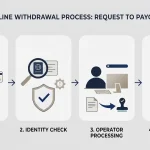
Operators may implement identity and payment checks before releasing funds. Some reported cases include requirements for notarised documents or video calls, which can lead to open-ended holds if the terms are not clearly disclosed.
For that reason, “best online casinos in Gibraltar” is not a defensible category unless the assessment says what is being compared. A higher advertised balance or faster estimate cannot compensate automatically for discretionary verification, unclear timing and weak complaint routes. Nor does a polished account page establish that a delay will be resolved on a predictable schedule. A sound assessment records the terms and the available protections separately, rather than compressing both into a single score.
The practical standard is straightforward: the more discretion an operator keeps over document requests and payment timing, the less certainty the player has over access to winnings. Terms that identify the process and set out a usable complaint route reduce ambiguity; vague clauses leave the risk with the account holder. Calling one site the best Gibraltar online casino without weighing those conditions would treat marketing language as evidence. In a money decision, that is a poor exchange.
New Casino Sites: Verify the Operator Before Depositing
A recently encountered casino is an unknown business, not a better one by virtue of being new. The first check is the identity behind the site: the company named in its terms, the entity operating the account, and the licence details it publishes should form a consistent picture. A brand name alone does not establish who holds the customer relationship or which rules apply.
For customers in Great Britain, the relevant distinction is whether the operator holds the required UK Gambling Commission licence. A Gibraltar address or a claim to hold a licence elsewhere does not substitute for that permission. The operator’s stated location and its authority to serve the British market are separate questions; a site’s recent launch answers neither.
Online casino no registration in the UK: what it means
Licence details should be checked against the regulator’s own records, rather than treated as a badge supplied by the casino. Where a site claims an Anjouan casino licence, the public entry, expiry date and company name need to match the operator’s details. A mismatch leaves the identity or status uncertain; it is not a minor presentation issue. The same discipline applies to a new online casino associated with Gibraltar: the wording of a claim is not evidence that the named company and the licensed entity are the same.
Verification terms matter before money is deposited, because checks may arise when a withdrawal is requested. The account rules should explain what documents may be required, how identity is confirmed and what happens if information is considered insufficient. A specialist review has reported cases in which operators requested notarised documents or video calls as part of withdrawal checks. That is a reported possibility, not a standard procedure across newly launched casinos, but it shows why vague wording such as “additional verification may apply” leaves the eventual burden unclear.
The practical assessment is straightforward: if the operating company cannot be identified, the licence claim cannot be matched to that company, or the verification rules are too vague to understand, the site’s age offers no offsetting value. A fresh design, a new-casino label or a date attached to a promotion cannot resolve those gaps. For a new casino presented as Gibraltar-licensed, the meaningful evidence is the identifiable operator and the applicable regulatory status—not the word “new”.
Verifying New Casinos
- Identify the specific operating company in the terms
- Match the licence details against the regulator’s public records
- Confirm if the operator holds a UK Gambling Commission licence
- Review the specific documents required for withdrawal verification
Online Casino Access Does Not Remove the Player’s Legal Risk
A player’s legal position and an operator’s permission to serve a market are separate questions. Under UK law, using an unlicensed gambling site is not a criminal offence for the player. That limited point does not turn the site into an authorised service, or transfer the operator’s licensing obligations to the customer.
The distinction matters when a site presents itself as an online casino licensed in Gibraltar. The location or licence named by the operator does not, by itself, establish that it may offer gambling to customers in Great Britain. Operators serving that market must hold a UK Gambling Commission licence, whatever their base or other licensing arrangements.
There is no contradiction between those statements. The law places the relevant licensing requirement on the operator, while not making a player’s use of an unlicensed site a criminal offence. A site can therefore be accessible to a British customer without being authorised to serve Great Britain. Access is not evidence of compliance; it is simply access.
That distinction also applies to casinos online based in Gibraltar or elsewhere. A foreign licence may describe the operator’s status in the jurisdiction that issued it, but it does not replace the UK licence required for service into Great Britain. Conversely, the absence of that UK licence does not mean that the player has committed a criminal offence merely by using the site.
The narrow conclusion is important because two broader claims would both be wrong: that a British player is committing a crime by using an unlicensed casino, and that a casino becomes authorised for Great Britain because the player can open its website. Neither follows from the law described here. Player liability and operator authorisation are not interchangeable categories.
For any casino online advertising a Gibraltar connection, the relevant question is not simply where the business says it is located. The legal test for the operator’s activity in Great Britain remains whether it holds the required UK Gambling Commission licence. The player’s lack of criminal liability does not answer that question, and it does not confer permission on the operator.
Why an Operator’s Base in Gibraltar Is Not the Whole Answer
A casino’s stated base describes where its operator is located; it does not, by itself, establish which rules apply to the service offered in Great Britain. Corporate location and market authorisation answer different questions. Treating them as interchangeable makes a location label do more work than it can support.
Gibraltar is one of several jurisdictions that may license non-UK-regulated casinos, alongside Malta, Curaçao and Anjouan. That can explain why an operator identifies Gibraltar in its company or licensing information. It does not settle whether the operator is authorised for every market in which its website can be accessed. A Gibraltar connection is not a substitute for checking the regulatory position relevant to Great Britain.
The distinction matters because the requirement is tied to the customers served, not the operator’s address. An operator serving customers in Great Britain must hold a UK Gambling Commission licence, regardless of whether its base is in Gibraltar or elsewhere. A location abroad does not remove that requirement, and a licence issued by another jurisdiction does not fulfil it.
This is also why the phrase “based in Gibraltar” is incomplete as a description of a casino’s status. It may refer to the company’s location, its licensing jurisdiction, or both; those details should not be assumed to mean the same thing. The decisive point for Great Britain is whether the operator holds the required UKGC licence to serve that market.
So, why are online casinos based in Gibraltar? The location may form part of an operator’s corporate and licensing arrangements, but the stated location alone does not explain the rules governing its Great Britain-facing service. The regulatory question remains separate: where the operator is based is one fact; whether it is authorised to serve customers in Great Britain is another.
Are sites that are not on GamStop legal for players in the UK to access?
Yes, using a foreign-licensed gambling service is not expressly prohibited for UK players, and players do not commit a criminal offence by gambling on an unlicensed site. The licensing requirement applies to operators serving customers in Great Britain: they need a UK Gambling Commission licence.
Is it legal for a UK player to gamble at an Anjouan-licensed casino?
UK law does not expressly prohibit a player from using a gambling service licensed abroad, and players do not commit a criminal offence by gambling on an unlicensed site. An Anjouan licence does not authorise an operator to serve customers in Great Britain; operators serving them need a UK Gambling Commission licence.
Are Anjouan casinos connected to the GamStop self-exclusion scheme?
No. Casinos outside UK Gambling Commission oversight are not part of GamStop.
Can I complain to the Anjouan regulator if a casino won’t pay me?
No. The Anjouan authority does not handle or decide player complaints, and Anjouan-licensed casinos do not have to offer an independent dispute resolution route comparable to UKGC-approved ADR. Operators must respond to complaints within 30 calendar days.
Casino Sites

Anjouan Casino Licence in the UK: What It Means
Anjouan licensing has a limited territorial scope and does not meet the UK authorisation requirement...

Casino apps in the UK: licensing and mobile play
The guide compares installed apps with mobile sites and explains licensing checks, account controls, withdrawals,...

Foreign Casinos for UK Players: Rules and Risks
The guide explains licensing status, bonus conditions, payment checks, withdrawal routes and protections that may...

International Casinos for UK Players: What to Know
The guide distinguishes UKGC authorisation from offshore licensing and examines access, payouts, bonus terms, crypto...

UK Mobile Casinos That Accept Phone-Credit Payments
Phone-credit deposits run through a network account or prepaid balance, distinct from using a mobile...

Best Offshore Casino Sites: UK Rules and Risks
A practical guide to UK licensing, payment and bonus conditions, identity checks, and risks that...

Best Offshore Casinos for UK Players: What to Check
Offshore casinos may accept UK customers without UKGC approval, leaving players outside some protections of...

British Casinos Not on GamStop: How Exclusion Works
GamStop exclusions apply to participating UKGC-licensed establishments, while other sites may operate outside that framework...

Casino Sites Not Registered with GamStop in the UK
See how UKGC licensing defines GamStop’s reach and what to consider when assessing casinos outside...

Casino No ID Verification in the UK: What It Means
A practical explanation of sign-up, play and payment checks, including why “no ID” claims do...

No ID Verification Withdrawal Casinos in the UK
The phrase “no ID verification” can describe delayed checks, while UK gambling businesses must verify...

Casino Without a UK Licence: Rules and Risks
A foreign licence does not mean UKGC oversight, and the difference can affect player protections,...

Casinos That Bypass GamStop: UK Access and Risks
The guide distinguishes UK self-exclusion protections from offshore licensing, access and bonus conditions. What a...

Curacao Casino Licences and UK Player Protections
A licence identifies a regulatory framework, but does not show whether a casino accepts UK...

Jackpot Mobile Casinos in the UK: Pool Rules
Jackpot games can use different pool structures, so the prize amount alone does not explain...

Merkur Casino Online UK: Games, Login and Checks
Merkur games, casino branding and account access can refer to different things, so operator status...

Most Trustworthy Online Casinos in the UK: Licence Rules
A practical framework for checking licensing, market boundaries, bonus terms and verification before assessing a...

No Account Casino UK: How It Works and What to Check
A no-account label can mean a shorter sign-up journey, but it does not remove identity...

Non-Gamban Casinos in the UK: What It Means
Gamban is a blocking service; GAMSTOP applies self-exclusion across participating licensed gambling websites and apps...

Non-GamStop Curaçao Casinos and UK Rules
A Curaçao licence claim, permission to serve Great Britain and participation in UK self-exclusion arrangements...

Non-GamStop European Casinos: UK Rules Explained
The “Non-GamStop” label describes a site outside the scheme, but does not establish its licence...

Non-UK Licence Casinos: What the Licence Means
Licensing jurisdiction, verification rules and withdrawal terms shape what oversight and player recourse may apply....

Non-UK-Registered Casinos: Licensing Explained
A foreign licence is not UKGC approval, and differences in rules can affect access, payments,...

Non-UK-Regulated Casinos: Rules and Protections
The guide distinguishes UKGC oversight from licences issued elsewhere and outlines the limits of player...

Non-UKGC Licensed Casinos: Rules and Risks
A guide to the difference between UKGC authorisation and offshore licences, including bonus conditions, payment...

Malta MGA Licence for UK Online Casinos: What Applies
A Malta operating licence is separate from permission to offer remote real-money gambling in England,...

Online casino no registration in the UK: what it means
Browser access can remove software installation, but it does not establish that an account or...

Online Casinos with No Sister Sites in the UK
Sister-site relationships can stem from common ownership or connected core technology; a similar look alone...

Online Slots Not on GamStop: Rules and Limits
GamStop exclusion is tied to participating UKGC-licensed operators, not to a particular slot, studio or...

Safe Online Casinos in the UK: Licence Checks
A practical guide to licence checks, bonus terms, account safeguards, payment steps and the limits...

Online Casino Payouts in the UK: How RTP Works
Understand how game returns, volatility, licensing and withdrawal timing shape casino payout claims. What an...

Trusted Casinos Not on GamStop UK: What to Know
A practical look at how non-UK casinos’ licensing, exclusion arrangements, payment terms and player safeguards...

Trusted UK Casino Checks: Licence, Offers and Payouts
A practical framework for checking who provides the gambling service, how safeguards work, and what...

USA Casinos for UK Players: Legal Status and Risks
The guide separates operator licensing from player liability and examines the practical terms and risks...

VPN-Friendly Casinos in the UK: What the Label Means
The guide explains how casino terms, UK consumer protections, privacy, verification and withdrawals relate to...