Trusted UK Casino Checks: Licence, Offers and Payouts
 Available in GB

A practical framework for checking who provides the gambling service, how safeguards work, and what offer and payment terms establish.
Table of Contents
- What a UK Casino Licence Actually Establishes
- Real-Money Play: Verification Before Deposits and Withdrawals
- Casino Sites, White Labels and Who Holds the Licence
- How to Read a Casino Offer in Pounds, Not Percentages
- Crypto Casinos and the UK Licensing Test
- A Trust Check That Includes Enforcement, Not Just a Licence
- Casino Reviews and Free Spins: Check the Conditions
- Casino Apps Still Need Account-Level Safeguards
- Bitcoin and Dogecoin Do Not Change the Jurisdiction
- Live Play and E-Wallets: Separate the Product from the Payout
- Casino Sites
What a UK Casino Licence Actually Establishes
A UKGC Licence is the starting point for assessing an online casino that offers real-money gambling in Great Britain. The relevant test is whether the business providing those facilities holds the required licence from the UK Gambling Commission. Its location does not remove that requirement: a company based overseas still needs the appropriate UKGC Licence if it serves consumers in Great Britain.
That boundary matters. Great Britain means England, Scotland and Wales for this licensing test; the Gambling Commission’s remit does not extend to remote-gambling provision in Northern Ireland in the same way. “UK casino” is common shorthand, but it can blur a legal distinction. A claim about service to customers across the UK should not be treated as proof that one regulator covers every part of the country.
A licence establishes regulatory status. It indicates that the operator is permitted to provide the relevant gambling facilities within the Commission’s regime. It is not a general certificate that every aspect of the business is excellent, nor does the word “trusted” appear as a separate regulatory grade. A trusted online casino, in a practical sense, is not identified by a promotional label alone; the first check is whether the operator serving Great Britain is licensed for that activity.
Choosing a trusted UK casino means looking beyond the name and considering practical details that are available. This reference highlights the stated payout timing for each listed operator.
1. Amunbet
Payout speed: 1-3 business days Amunbet lists a payout speed of 1–3 business days.
2. NightLuck
Payout speed: 1-3 business days NightLuck lists a payout speed of 1–3 business days.
3. WinBeast
Payout speed: 1-3 business days WinBeast lists a payout speed of 1–3 business days.
4. Britsino
Payout speed: 1-3 business days Britsino lists a payout speed of 1–3 business days.
5. EvoSpin
Payout speed: 1-3 business days EvoSpin lists a payout speed of 1–3 business days.
6. BeOnBet
Payout speed: 1-3 business days BeOnBet lists a payout speed of 1–3 business days.
7. Zombillion
Payout speed: 1-3 business days Zombillion lists a payout speed of 1–3 business days.
8. SlotoSport
Payout speed: 1-3 business days SlotoSport lists a payout speed of 1–3 business days.
9. SpinFormula
Payout speed: 1-3 business days SpinFormula lists a payout speed of 1–3 business days.
10. x3bet
Payout speed: 1-3 business days x3bet lists a payout speed of 1–3 business days.
The licence is a threshold, not a verdict
The difference is between permission to operate and an overall judgement about quality. A UKGC Licence addresses the first. It does not, by itself, settle every question a customer might have about the experience, the clarity of the terms, or the handling of a particular account. Those are separate matters requiring their own evidence.
This is why “most trusted online casino” is not a regulatory category. The Commission does not issue a league table of trust, and a licence does not mean that one operator is safer or more dependable than another simply because both hold one. A site can accurately refer to its regulated status; a broader claim of being among the best trusted online casinos needs a clear basis beyond the existence of a licence.
The distinction is useful because confidence language is cheap. “Secure”, “reliable” and “trusted” can describe a brand’s image without explaining who is legally responsible for the gambling service. Regulatory status is more concrete: it can be checked against the operator and the activity covered by its authorisation. The practical question is not whether a page sounds reassuring, but whether the business offering the gambling to Great Britain holds the required permission.
Casino Sites and Safety: Licensing and Access
Geography determines the licensing test
The Commission regulates remote gambling offered to consumers in Great Britain. The operator’s country of incorporation or office address does not change that market-side obligation. A business cannot avoid the British licensing test merely by locating its servers, management or company registration elsewhere.
That makes the licence a jurisdictional requirement, not a badge that travels automatically between markets. A licence issued by another regulator does not, on its own, establish permission to offer real-money gambling in Great Britain. The relevant status for this market is the UKGC Licence required for the service being offered here.
The same point applies to marketing language that presents an overseas location as a reason to relax the test. Location may describe where a company is based; it does not answer whether it is authorised to serve British consumers. The two facts are not interchangeable. For an online casino aimed at Great Britain, the licensing question follows the customer market, not the operator’s postal address.
What a licence can and cannot tell a customer
A valid licence is meaningful because it separates a regulated operator from a business that lacks the required permission to provide real-money gambling in Great Britain. It is therefore a necessary baseline when considering a trusted UK online casino. Without that baseline, claims about customer care or product quality do not answer the central question of legal authorisation.
But necessary does not mean sufficient. A licence cannot promise that every interaction will be smooth, that every customer will be satisfied, or that a particular result will be favourable. Gambling outcomes remain uncertain, and regulatory status does not turn them into a predictable return. Nor should a general claim of trust be read as a guarantee against every dispute or operational problem.
Attention: A UKGC Licence is a necessary baseline for authorisation, but it is not a guarantee against every dispute or operational problem.
A sensible assessment keeps the categories separate. First comes the legal threshold: does the operator hold the relevant UKGC Licence to offer real-money gambling in Great Britain? Then come the other questions that shape a customer’s experience. Treating those as distinct avoids two errors: mistaking polished branding for authorisation, and mistaking authorisation for a complete endorsement.
There is no useful shortcut in the phrase “top trusted online casino UK”. For a site serving Great Britain, the licence establishes that the operator meets the regulatory entry condition for offering the relevant gambling facilities. It does not rank the site, certify every claim made about it, or replace an assessment of its conduct. That is a narrower statement than a marketing promise, and a more useful one.
Real-Money Play: Verification Before Deposits and Withdrawals
For a real-money account, identity checks are not a formality saved for the point when winnings are requested. Under UK rules, verification must be completed before a customer can deposit or play. That makes account access conditional on establishing who is opening the account, rather than a later administrative step that can safely be ignored until a withdrawal.
The distinction matters when comparing a trusted real-money casino in the UK with a site that merely makes a polished first impression. Registration may begin with basic details, but an account is not ready for real-money activity until the required checks are complete. A welcome offer, game catalogue or payment option does not change that sequence. The relevant question is whether the account holder can satisfy the operator’s identity requirements before staking money.
USA Casinos for UK Players: Legal Status and Risks
What the checks may involve
Identity verification commonly involves uploading a photograph of a passport or driving licence, together with a recent utility bill. The identification document supports the identity claim; the bill can help establish the address. The precise documents requested can depend on the operator’s process, so a list on one site should not be treated as a universal checklist for every casino.
The practical task is to submit clear, readable documents that correspond to the account details. A blurred image, obscured information or details that do not match the account can leave a check unresolved. This is not a separate fee or a condition of a bonus: it is part of establishing access to a real-money gambling account. Supplying documents does not itself establish that every other account condition has been met.
A sensible comparison of trusted online casinos for real money therefore includes the verification stage, not just the registration screen. The process should explain what evidence is required and how it can be supplied. If those instructions are difficult to find, the account may still face the same underlying check later; poor visibility does not remove the requirement.
Why withdrawals can bring another check
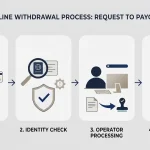
Verification before play does not mean that every later account review is complete. A first withdrawal may trigger additional document checks, including where the operator needs to confirm the submitted evidence or resolve an outstanding question. A specialist casino review reports that first withdrawals can take an additional 12–24 hours for document checks. That is a reported processing interval, not a guaranteed timetable for every operator or every account.
First withdrawals may require additional document checks, which can take a reported 12–24 hours for processing.
The distinction between an operator’s review and the time taken for money to reach an account is important. A document check may hold up approval, while payment processing is a separate stage. The amount of time involved can depend on what remains to be checked; a general estimate cannot promise when a particular withdrawal will clear. No fixed payout time follows simply from having passed the initial identity check.
For customers comparing real-money casinos, the useful measure is clarity: whether the site explains when it may request evidence, what documents it accepts and how an unresolved check affects account access. A claim of quick withdrawals is incomplete if it says nothing about the review that must come first. The balance displayed in an account and money available outside it are not necessarily the same thing while a check is pending.
Offers and payment choices do not replace identity checks
A trusted casino welcome bonus, or a choice of payment methods, does not make verification optional. Promotional terms determine how an offer works; account checks determine whether the customer can use real-money services. These are separate conditions. An attractive offer cannot compensate for uncertainty about how identity evidence is handled, and a familiar payment label does not establish that an account is verified.
The same point applies to searches for trusted Ethereum casinos or other payment-specific options. A payment route is not evidence of identity, and choosing one does not bypass the checks attached to a real-money account. Deposit and withdrawal availability are separate, but the immediate issue here is earlier in the sequence: the operator must verify identity before deposit or play is allowed.
Casino Without a UK Licence: Rules and Risks
Before submitting documents, the account details and the evidence can be checked for consistency and legibility. The document image should show the relevant information without unnecessary obstruction. If the operator requests further evidence, the reason and the steps for responding should be clear. These checks are practical safeguards against preventable delays, not a promise that an operator will approve every document immediately.
The financial calculation is straightforward: funds should not be treated as available for play until the pre-play check is complete, and a withdrawal should not be treated as approved merely because a balance appears in the account. Verification is an account-access condition at the start and can remain relevant when money is requested later. That is the level at which claims about trusted real-money casinos in the UK become testable: not through the wording of an offer, but through a transparent process for confirming identity and handling an unresolved review.
Casino Sites, White Labels and Who Holds the Licence
A casino’s name on a browser tab is not necessarily the name of the business holding its UKGC Licence. The distinction matters because a branded website can be connected to a different legal entity: the domain identifies the customer-facing site, while the licence belongs to an operator recorded by the regulator. Treating those names as interchangeable can leave a basic ownership check unfinished.
White Label
An arrangement where a brand presents the casino to customers, while a separate licensed company is the operator responsible for the regulated gambling service.
A White Label arrangement makes that separation explicit. A brand may present the casino to customers, while a licensed company is identified as the operator behind the domain. The arrangement does not make the domain itself a licence holder. Nor does a familiar brand name, polished presentation or bonus banner establish which company is responsible for the regulated gambling service.
The public register provides a concrete example. Its entry links 333casino.com to Grace Media (Gibraltar) Limited, under operator account 57869, and classifies the domain as a White Label. That is a specific register record, not a general rule about how casino websites are structured. Register information can change, so the useful point is the method: a domain can be associated with a named operator and an account number without being that operator’s legal name.
Match the domain to the operator
A site-level check starts with the exact web address, not just the casino brand. Look for that domain in the UK Gambling Commission’s public register and note the associated operator and account details. Then compare the register entry with the legal entity named in the site’s terms and conditions. The names may differ in a White Label arrangement; the difference is a reason to establish the connection, not proof by itself that the site is unlicensed.
The important question is whether the domain is associated with a UKGC-licensed operator for the relevant service. A company name in a footer, by itself, does not show that its licence covers the site being examined. Likewise, finding a licence record for a similarly named company is not enough if the domain is absent or the listed relationship is unclear. The precise domain is the join between the customer-facing brand and the register entry.
Non-UKGC Licensed Casinos: Rules and Risks
This distinction also affects how a casino review should describe a site. “Licensed” is incomplete if it does not make clear which operator holds the licence and how the casino domain is linked to it. A review can make that relationship easier to assess by naming the company as recorded and identifying the relevant domain, rather than relying on the brand name alone. That is more useful than a trust label without the entity behind it.
What the register can and cannot establish
A register entry is evidence of the recorded relationship between a domain and an operator. It is not a guarantee that every customer experience will be satisfactory, and it does not turn the brand into the licence holder. Licence status and the identity of the responsible operator are separate checks from the quality of a promotion, the handling of an account or the service a player receives.
The same distinction applies when assessing trusted casino sites in the UK. A brand can be recognisable without being the legal entity named by the regulator; an operator can hold a licence while using a customer-facing domain with a different name. The record must connect the two. If the site’s terms name one company and the register associates the domain with another, the relationship should be understood before drawing a conclusion from either name alone.
Do
- Match the exact web address in the UKGC public register
- Compare the register entry with the legal entity in the terms
Don’t
- Rely on a brand name or logo as proof of licensing
- Assume a company footer alone proves the site is covered
White Label is therefore a description of a domain relationship, not a substitute for checking the operator. In the 333casino.com entry, the register names Grace Media (Gibraltar) Limited and account 57869. The practical result is a clearer map of the site’s regulatory identity: brand at the front, domain in the register, operator behind it. A trust assessment that stops at the logo has not yet identified who holds the licence.
How to Read a Casino Offer in Pounds, Not Percentages
A percentage describes the size of a promotion, not the amount of play required to turn it into withdrawable money. The useful calculation starts with the bonus value and the wagering multiple. A specialist casino review illustrates the arithmetic with a £20 bonus carrying 10x wagering: the required total stake is £200. That is turnover, not a required deposit and not a promised cash return. The money can be staked repeatedly, and the result depends on play.
The wording of the condition matters. If wagering applies to bonus funds, the multiple is calculated against the bonus; if it applies to the deposit and bonus together, the base is larger. Those are materially different offers, even where the headline percentage looks identical. The offer terms need to identify the calculation base, eligible games, any maximum stake and the point at which winnings become withdrawable. A headline alone supplies none of that arithmetic.
VPN-Friendly Casinos in the UK: What the Label Means
Game contribution changes the effective workload. A specialist casino review describes slots as often counting their full stake towards wagering, while live tables and blackjack can count at a reduced rate or not count. If a game contributes only part of a stake, more cash must be wagered to produce the same credited progress. A game that contributes nothing does not advance the requirement, regardless of how much is staked on it. The contribution table is therefore part of the calculation, not decorative small print.
Eligibility can reduce the offer to zero before play begins. A specialist review reports welcome deals restricted to new customers and limited to one per household; some terms also exclude payment methods, including e-wallets. A returning customer, a second account in a household or an excluded funding route may fail the conditions. The headline value is not the value available to every account.
Time is another cost. Bonus funds and free spins are reported by specialist reviews as expiring after a defined period, with cited terms spanning 7 to 30 days. An expiry date can make a large wagering requirement impractical if the qualifying activity cannot be completed in time. Check when the clock starts, whether it applies to the bonus or winnings, and what happens to any remaining balance when the period ends.
The comparison that matters is the cash stake required, the games that count, the eligibility rules and the time allowed. A large percentage can conceal a larger qualifying base, weak game contribution or an expiry condition. Once those are translated into pounds and playable conditions, the offer can be compared on what it actually requires rather than on its headline.
Bonus Calculation
Identify the base
Determine if wagering applies only to the bonus funds or to both the deposit and bonus together.
Apply the multiple
Multiply the bonus value by the wagering requirement (e.g., £20 bonus × 10x wagering = £200 total stake).
Check contributions
Consult the contribution table to see if games like slots count fully or if tables count at a reduced rate.
Verify deadlines
Check the expiry period (typically 7 to 30 days) to ensure the wagering can be completed in time.
Crypto Casinos and the UK Licensing Test
A crypto payment option does not establish that an online casino is trustworthy or permitted to serve customers in Great Britain. The relevant question is whether the business offering real-money gambling to people there holds the appropriate UK Gambling Commission licence. The form of payment does not replace that test.
This distinction matters because a casino’s branding, website location or stated business address may draw attention away from the party providing the gambling facilities. The regulatory requirement applies to remote gambling businesses offering those facilities to consumers in Great Britain, wherever the business itself is based. A business does not avoid the requirement by describing its service as crypto-based or by accepting a digital asset instead of pounds.
The word “trusted” also needs a defined basis. A site may describe itself as a trusted crypto casino, but that phrase is not a regulatory status. It does not show that the operator has the required licence, identify the licensed business or demonstrate how the service is supervised. A payment option says something about how a transaction may be made; it does not, on its own, answer who is responsible for the gambling service or whether that service is licensed for the British market.
A useful assessment therefore separates two questions. First, is the business offering real-money gambling to people in Great Britain covered by the required UKGC Licence? Second, does the information presented about the site identify the responsible operator clearly enough to connect the service with that licence? The first is a regulatory threshold, not a rating. The second is necessary to avoid treating a casino’s public-facing name as proof of its legal status.
Merkur Casino Online UK: Games, Login and Checks
The same distinction applies to labels such as “most trusted” or “top” crypto casinos. Those are comparative claims, not evidence of regulatory standing. A list or badge cannot make an unlicensed service licensed, and a crypto feature cannot supply the missing connection between a gambling website and its responsible operator. Trust claims should be assessed against verifiable regulatory information rather than the novelty or convenience of a payment method.
For customers in Great Britain, the licensing question is the same whether the site presents itself as a conventional online casino or highlights crypto. The business’s location does not change the requirement when it offers remote gambling to consumers there. The payment label does not change it either.
This is a narrow test, but an important one: crypto is not a substitute for a UKGC Licence. It is neither proof of trustworthiness nor an exception to the licensing requirement. A site’s own description can make a claim; only the relevant regulatory status establishes whether the business is authorised to offer remote gambling in Great Britain.
A Trust Check That Includes Enforcement, Not Just a Licence
A UKGC Licence establishes that an operator is authorised to serve customers in Great Britain; it does not, by itself, show how well the operator has handled every customer-protection duty. A more complete trust check considers both regulatory status and the record of enforcement. The distinction matters: a licence is a threshold for lawful operation, not a certificate that every process has worked perfectly.
A UKGC Licence establishes the threshold for lawful operation, while enforcement records show how an operator has handled customer-protection duties in practice.
Grace Media provides a documented example. On 26 June 2025, the UK Gambling Commission fined the company £60,000 over breaches connected with self-exclusion and consent for direct electronic marketing. The case links two separate protections: a customer’s ability to exclude themselves from gambling and the operator’s basis for sending marketing messages. The penalty is a concrete reminder that registration and compliance are not interchangeable.
Self-exclusion has a wider system behind it. Online operators within the Commission’s Great Britain regime have been required to take part in GAMSTOP since 31 March 2020. That requirement creates a shared route for people seeking to block themselves from participating with covered operators. It does not remove the need to examine whether an individual business has met its obligations in practice; the Grace Media case shows why both levels belong in a trust assessment.
Marketing controls also matter. Casinos must give customers more control over the kinds of promotions they receive and the channels used to send them. Consent should therefore be treated as a distinct part of account protection, rather than as a minor setting attached to an offer. A promotion can have clear financial terms and still raise a separate question about whether the customer agreed to receive it.
For a practical review, the record can be read in layers: confirm that the operator has the required UKGC Licence, then look for relevant regulatory action and consider what customer-protection area it concerned. A penalty is not, by itself, proof that every current process remains deficient; equally, the existence of a licence does not erase a documented breach. The useful conclusion is narrower and more precise: authorisation answers whether the operator may serve the market, while enforcement history shows whether duties have previously required regulatory action.
Anjouan Casino Licence in the UK: What It Means
That is a more defensible basis for describing trusted UK casinos than treating a licence badge as a complete verdict. In this case, the amount and date are specific; the lesson is not that every licensed casino has the same record, but that self-exclusion and marketing consent deserve attention alongside formal status.
Casino Reviews and Free Spins: Check the Conditions
A review that calls an offer “generous” has not yet established its value. The useful part is the terms attached to bonus funds and free spins: when they expire, what wagering is required, which games count towards it, and whether a cash-out is restricted. Without those details, the headline describes the packaging, not the conditions.
A specialist review reports that bonus funds and free spins may have expiry periods ranging from 7 to 30 days. That is a reported range, not a rule applying to every offer. A review should give the expiry stated in the relevant terms and distinguish the deadline for claiming a promotion from the deadline for using its bonus. If either date is unclear, the value cannot be assessed reliably.
Wagering contribution also changes the practical worth of an offer. A specialist review describes slots as contributing 100% towards wagering, while live tables and blackjack may count at a lower rate or not count at all. The exact game categories and contribution rates need to be visible; a general statement that “games count” conceals the material distinction. A low-contribution game can require substantially more play to meet the same stated condition.
terms of an offer can reduce its value to zero if payment methods are excluded or the user is not a new customer.
The headline percentage is not a substitute for the full terms. One example reported in a specialist review is a 100% match bonus capped at £200, with a 30x rollover. Those figures describe one possible offer, not a standard across UK casinos. A review should identify what the rollover applies to—bonus funds, deposit and bonus, or another defined amount—rather than leave the calculation’s base unstated.
For free spins, the review should state the number of spins, the eligible game, any value assigned to each spin, and how winnings are treated. It should also make clear whether winnings become withdrawable cash or remain subject to wagering. Calling spins “free” does not settle those conditions.
Other restrictions can reduce access to the offer. The terms may limit eligibility to new customers, restrict an offer to one per household, or exclude particular payment methods. A review should report those restrictions rather than bury them beneath a prominent bonus figure. The offer’s practical value depends on eligibility as well as the wagering and expiry rules.
A useful review makes the terms traceable to the promotion itself and separates confirmed conditions from general descriptions. It should not present a changing offer as permanent or imply that a favourable headline removes the underlying restrictions. Where key terms are absent, the defensible assessment is that the offer cannot be valued from the review alone.
Casino Apps Still Need Account-Level Safeguards
A casino app is an access route to an account, not a separate trust category. The relevant protections attach to the operator and the gambling account; an app’s presence on a phone does not establish that those protections are in place.
Curacao Casino Licences and UK Player Protections
For operators serving consumers in Great Britain under the Gambling Commission regime, participation in GAMSTOP has been compulsory since 31 March 2020. Self-exclusion is therefore an account-level safeguard, not a feature that should depend on whether gambling takes place in an app or on a website. Before treating an app as a suitable route to play, the operator’s identity and regulatory status still need to be clear.
Other controls also sit at account level. Remote operators must prompt new customers to set a financial limit before their first deposit and make account-level limit controls accessible. UKGC-licensed casinos must provide responsible-gambling tools, including self-exclusion. These protections are more meaningful than an app’s design, notifications or convenience: those are interface characteristics, not evidence of safer account terms.
The distinction matters when an app is removed from a device. Deleting it does not, by itself, close the gambling account or activate self-exclusion. Account controls need to be used through the operator’s available account process; a player who needs to exclude themselves across participating operators can use GAMSTOP. App deletion may reduce access from one device, but it is not a substitute for an account restriction.
A claim of a “trusted casino app” should therefore be tested against the operator and the controls attached to the account, rather than the software alone. The practical check is whether self-exclusion and limit-setting are available and whether the operator falls within the relevant Great Britain regulatory regime. A polished download page cannot change those obligations, and a mobile format does not create an exemption.
App Safeguards
Casino apps are access routes; real protections like self-exclusion and limit-setting exist at the account level, not the software level.
Bitcoin and Dogecoin Do Not Change the Jurisdiction
Bitcoin and Dogecoin describe payment assets, not a separate legal category for casino gambling. If an operator offers real-money gambling to customers in England, Scotland or Wales, it must hold a UK Gambling Commission (UKGC) licence. That requirement applies whether the proposed payment is in pounds, Bitcoin or Dogecoin.
The distinction matters when assessing claims about trusted Bitcoin casinos in the UK. A site’s willingness to discuss a cryptocurrency, or a payment option displayed on its pages, does not establish that the operator is licensed to serve customers in Great Britain. Nor does a digital currency label replace the need to identify the business responsible for the gambling service. Payment branding and regulatory status answer different questions.
The same test applies to Dogecoin. A casino that presents Dogecoin as part of its offer is not thereby exempt from the licensing requirement for real-money gambling offered in Great Britain. The relevant point is whether the operator holds the required UKGC Licence for that activity, not which currency appears in its payment information.
This also separates two questions that can otherwise be blurred. One is whether a particular casino accepts Bitcoin or Dogecoin; that depends on the operator’s current terms and cannot be inferred from the currency’s name. The other is whether the gambling service is authorised for the British market. The payment method, by itself, answers neither question conclusively.
A useful assessment therefore starts with the operator and the scope of its authorisation, then treats payment details as a separate matter. A cryptocurrency option is not evidence of trustworthiness, and a claim of trustworthiness is not evidence of a UKGC Licence. For real-money casino play offered to customers in England, Scotland and Wales, the licensing requirement remains in place regardless of the payment label.
Live Play and E-Wallets: Separate the Product from the Payout
Live dealer games and e-wallets answer different questions. A live table is a game category; an e-wallet is a payment route. Neither tells much about the other, and a casino offering one does not necessarily offer a particular version of the other.
The distinction matters when a promotion has wagering conditions. A specialist casino review reports that slots contribute 100% of a bonus wagering requirement, while live tables and blackjack may contribute less or nothing. The applicable terms determine the calculation: a stake on a live table may therefore clear less of a requirement than the same stake on a slot, or may not count towards it. The percentage displayed beside a bonus is not the whole cost if game contribution differs.
Payment timing is a separate calculation. A specialist payment comparison puts PayPal withdrawals at roughly 4–6 hours on weekdays, extending to 8–10 hours from Friday to Sunday. The same type of comparison gives debit card withdrawals as 2–3 banking days after the operator has reviewed the request. These are reported processing windows, not a promise for every casino or account; operator review and the payment provider’s handling are separate stages.
Deposit and withdrawal availability are separate, too. A payment method shown for funding an account does not establish that it can receive a withdrawal. The available routes and any conditions should be checked in the operator’s own payment information before treating a displayed payment logo as a usable payout option.
For a live casino account funded through an e-wallet, the practical assessment is therefore two-part: check how live-game stakes count under the promotion, then check whether the chosen wallet can receive withdrawals and what processing time is stated. Fast game access does not shorten a payout queue, and a quick payment route does not improve the value of a bonus.
Is 333 Casino licensed for Great Britain?
The UK Gambling Commission register links 333casino.com to Grace Media (Gibraltar) Limited as a White Label domain. Grace Media was fined £60,000 in June 2025 for breaches involving self-exclusion and direct-marketing consent.
What are the deposit limits and safer betting tools?
Limit reductions take effect immediately, while increases have a cooling-off delay. Players aged 25 and over are limited to £5 per spin, and those aged 18 to 24 to £2 per spin.
What payment types are listed?
The listed payment types are PayPal, debit cards and bank transfers. PayPal withdrawals are described as taking roughly 4–6 hours on weekdays, while debit card withdrawals typically take 2–3 banking days after review.
What is the context of GAMSTOP and self-exclusion?
Online operators serving Great Britain must participate in GAMSTOP, and participation has been compulsory since 31 March 2020. Grace Media was fined £60,000 in June 2025 for breaches involving self-exclusion and direct-marketing consent.
Is LeoVegas UK licensed?
Yes. The Gambling Commission lists LeoVegas Gaming PLC under operator account number 39198 and identifies leovegas.co.uk as its active UK-facing domain.
Casino Sites

Anjouan Casino Licence in the UK: What It Means
Anjouan licensing has a limited territorial scope and does not meet the UK authorisation requirement...

Casino apps in the UK: licensing and mobile play
The guide compares installed apps with mobile sites and explains licensing checks, account controls, withdrawals,...

Foreign Casinos for UK Players: Rules and Risks
The guide explains licensing status, bonus conditions, payment checks, withdrawal routes and protections that may...

International Casinos for UK Players: What to Know
The guide distinguishes UKGC authorisation from offshore licensing and examines access, payouts, bonus terms, crypto...

UK Mobile Casinos That Accept Phone-Credit Payments
Phone-credit deposits run through a network account or prepaid balance, distinct from using a mobile...

Best Offshore Casino Sites: UK Rules and Risks
A practical guide to UK licensing, payment and bonus conditions, identity checks, and risks that...

Best Offshore Casinos for UK Players: What to Check
Offshore casinos may accept UK customers without UKGC approval, leaving players outside some protections of...

British Casinos Not on GamStop: How Exclusion Works
GamStop exclusions apply to participating UKGC-licensed establishments, while other sites may operate outside that framework...

Casino Sites Not Registered with GamStop in the UK
See how UKGC licensing defines GamStop’s reach and what to consider when assessing casinos outside...

Casino No ID Verification in the UK: What It Means
A practical explanation of sign-up, play and payment checks, including why “no ID” claims do...

No ID Verification Withdrawal Casinos in the UK
The phrase “no ID verification” can describe delayed checks, while UK gambling businesses must verify...

Casino Without a UK Licence: Rules and Risks
A foreign licence does not mean UKGC oversight, and the difference can affect player protections,...

Casinos That Bypass GamStop: UK Access and Risks
The guide distinguishes UK self-exclusion protections from offshore licensing, access and bonus conditions. What a...

Curacao Casino Licences and UK Player Protections
A licence identifies a regulatory framework, but does not show whether a casino accepts UK...

Gibraltar Casino Licence in the UK: What It Means
A Gibraltar licence identifies the operator’s regulator, while UK-facing service in Great Britain requires separate...

Jackpot Mobile Casinos in the UK: Pool Rules
Jackpot games can use different pool structures, so the prize amount alone does not explain...

Merkur Casino Online UK: Games, Login and Checks
Merkur games, casino branding and account access can refer to different things, so operator status...

Most Trustworthy Online Casinos in the UK: Licence Rules
A practical framework for checking licensing, market boundaries, bonus terms and verification before assessing a...

No Account Casino UK: How It Works and What to Check
A no-account label can mean a shorter sign-up journey, but it does not remove identity...

Non-Gamban Casinos in the UK: What It Means
Gamban is a blocking service; GAMSTOP applies self-exclusion across participating licensed gambling websites and apps...

Non-GamStop Curaçao Casinos and UK Rules
A Curaçao licence claim, permission to serve Great Britain and participation in UK self-exclusion arrangements...

Non-GamStop European Casinos: UK Rules Explained
The “Non-GamStop” label describes a site outside the scheme, but does not establish its licence...

Non-UK Licence Casinos: What the Licence Means
Licensing jurisdiction, verification rules and withdrawal terms shape what oversight and player recourse may apply....

Non-UK-Registered Casinos: Licensing Explained
A foreign licence is not UKGC approval, and differences in rules can affect access, payments,...

Non-UK-Regulated Casinos: Rules and Protections
The guide distinguishes UKGC oversight from licences issued elsewhere and outlines the limits of player...

Non-UKGC Licensed Casinos: Rules and Risks
A guide to the difference between UKGC authorisation and offshore licences, including bonus conditions, payment...

Malta MGA Licence for UK Online Casinos: What Applies
A Malta operating licence is separate from permission to offer remote real-money gambling in England,...

Online casino no registration in the UK: what it means
Browser access can remove software installation, but it does not establish that an account or...

Online Casinos with No Sister Sites in the UK
Sister-site relationships can stem from common ownership or connected core technology; a similar look alone...

Online Slots Not on GamStop: Rules and Limits
GamStop exclusion is tied to participating UKGC-licensed operators, not to a particular slot, studio or...

Safe Online Casinos in the UK: Licence Checks
A practical guide to licence checks, bonus terms, account safeguards, payment steps and the limits...

Online Casino Payouts in the UK: How RTP Works
Understand how game returns, volatility, licensing and withdrawal timing shape casino payout claims. What an...

Trusted Casinos Not on GamStop UK: What to Know
A practical look at how non-UK casinos’ licensing, exclusion arrangements, payment terms and player safeguards...

USA Casinos for UK Players: Legal Status and Risks
The guide separates operator licensing from player liability and examines the practical terms and risks...

VPN-Friendly Casinos in the UK: What the Label Means
The guide explains how casino terms, UK consumer protections, privacy, verification and withdrawals relate to...